A BEGINNER'S GUIDE TO LAVENDER (& its hybrids) IN PERFUMERY

Contents1. Introduction
2. A brief history of Lavender
3. The Lavender family and its Hybrids
4. Usage of Lavender in olfactive compositions
5. Which Lavender is used in Parfumery? Which one is better?
6. Perfumes with Lavender7. Additional external resources
8. Bibliography
INTRODUCTION

pic credits: print ad- Crab Apple Blossoms Perfume & Crown Lavender Salts; The Crown Perfumery Co 1895 (via Period Paper)
We all love perfume, yet we rarely engage in understanding the various processes behind a shelf product.
Evaluating fragrances by their olfactive pyramid and notes are a great introductory start to become a more critical and independent consumer, but on a long, they are not exhaustive ( for example, remember: notes ≠ ingredients ), especially considering how the line between dupes, counterfeits and original creations is officially drawn by PR/marketing/brand image price.
I mostly hear such statement perpetuated by online perfume influencers with a big following, and the dangerousness of such affirmations is partly responsible for the very much oversaturated, yet indistinguishable market of the so-called 'niche'.
But is it really that simple?
Is it possible that an equivalent sold at 30$ is equally as great as its 120$ original?
I urge people with big platforms to be more educated and mature when engaging on the topic of 'quality' concerning raw materials and compounds.
I was privileged enough to be part of the world of the artisanal essential oil industry for quite a good amount of years, and I am happy to share what I have learned during that period.
The example of lavender and its hybrids offers an introductory panoramic to a more critical and aware evaluation of perfumery.
I will follow by presenting the main nuances of lavander and how they can affect not only health but also the final quality, smell and performance of the juice.
A BRIEF HISTORY OF LAVENDER
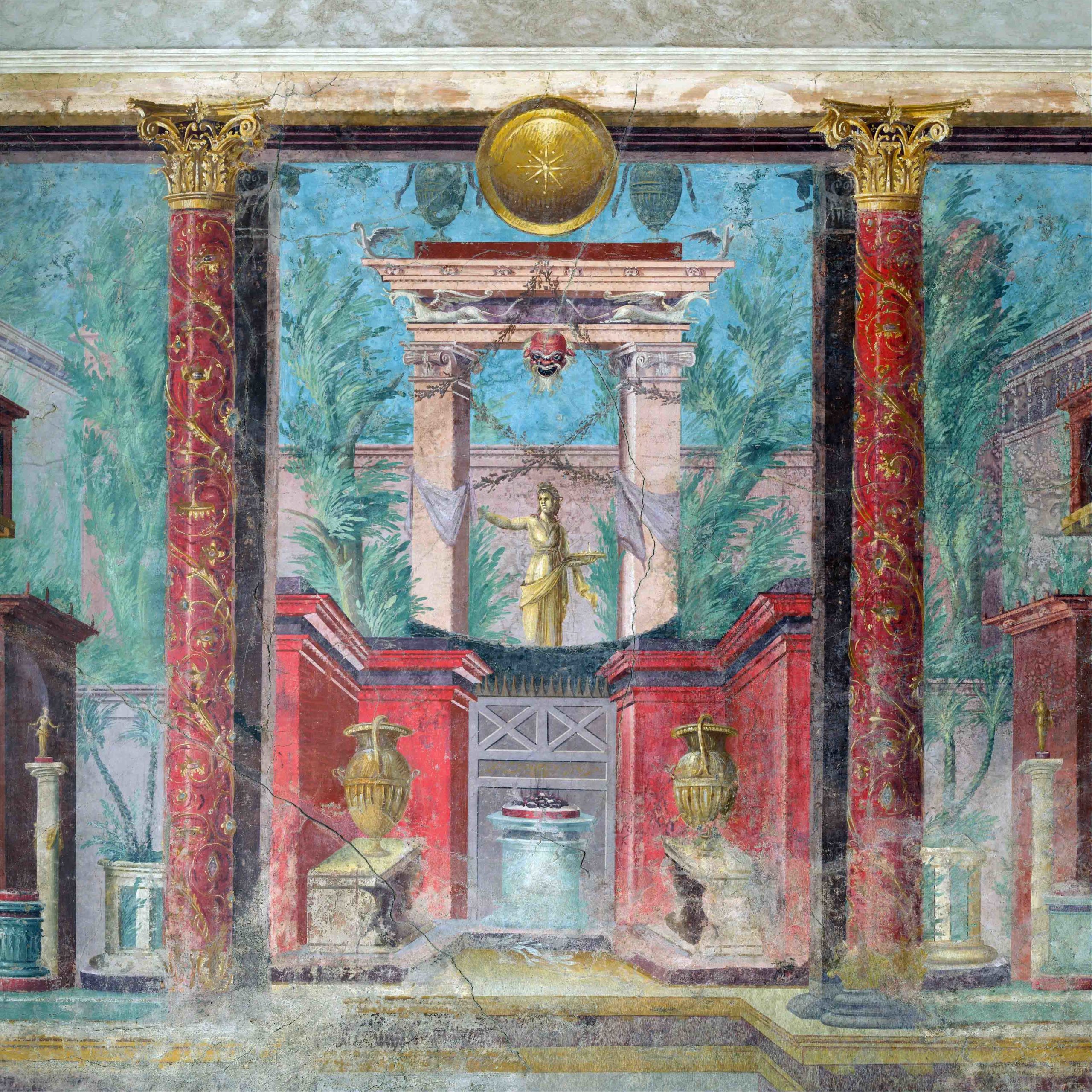
Ancient Greeks and Romans are considered to have been already avid and multifaceted consumers of lavender.
It is believed that Dioscorides wrote the oldest testimony we have on the healing properties of lavender.
But many other cultures (as the ancient Egiptian and Syrians) were familiar with the plant.
Romans are also considered to be the ones who brought lavander to England, but its popularity grew in the country only from the 16th Century under Queen Elizabeth's reign.
Hildegard of Bingen, the revolutionary Benedictine abbess, is indicated as the first person to distinguish two types of Lavender - Lavender Vera and Lavander Spica.
(If you are interested to find out more about the incredible figure of Hildegard and her polyhedral contributions to science, philosophy, theology and botany, check the external resourches at the end of the article.)
It is only because of Maud Grieve and her systematic work on herbal plants in the volumes of A Modern Herbal, that finally lavender's hybrids and denominations are introduced in encyclopedias.
In literature, lavender appears among others in Shakespeare's Winter Tale (act four), Tennyson's Ode to Memory, Cervante's Don Quixote.
 |
| via Retrocards |
Additionally, lavender was used for representation purposes among the LGBTQIA+ community: lavender boy / lavender woman represent only few examples of how botany and lavender became a mode of representation and coding between marginalized communities.
THE LAVENDER FAMILY AND ITS HYBRIDS
Lavender is a Mediterranean perennial shrub, but it is currently cultivated in different parts of the globe.
It is a relatively easy to grow plant, and it necessitates just a few cares throughout the year.
 |
| Dr. Gottlob Hayne's Medical Botany, 1822; (via alamy.com ) |
The two most cultivated varieties are Lavandula vera (also known as Lavandula officinalis or angustifolia) and Lavandin, a hybrid of lavender angustifolia and lavender latifolia.
The fragrance and cosmetic industry popularized the terms "english lavender'' and ''french lavander''.
Such terminology is not particulary accurate since for both terms, there are at least two species indicated to refer for the lavender.
French lavander can refer then to Lavandula dentata or Lavandula stoechas (sometimes also called spanish lavender).
LAVENDER EMPLOYMENT WITHIN FRAGRANCE COMPOSITIONS
Oh, Bucoliques de Provence!
I am not the best person to ask for an objective opinion on L' Artisan Parfumeur, as I have been a very problematic apologist of the different marketing choices they've undertook, from engaging with the classic French colonialist fantasy / nostalgia, to the some controversial choices of re-branding and discontinuing their most iconic fragrances, leading to a biss portfolio mess.
Yet, the collection Les Paysages still holds a very sentimental soft spot in my consumeristic heart.
Quality on a budget, I've got you!
Hands down my favorite lavender scent.
Predictable? Probably. But if this one is considered the GOAT of lavender fragrances, probably there's a very backed-up reason.
For two Cantabrigians, Oxford & Cambridge has immediately a very biased psycho-emotional connotation, and the Boat Race graphic homage doesn't sooth such sentimentalism.
On the contrary, "English lavender" usually refers to Lavandula Angustifolia.
LAVENDER EMPLOYMENT WITHIN FRAGRANCE COMPOSITIONS
Lavender has been historically used for different creative, religious, social or medical purposes.
Lavender buds are often used in patisserie to add a distinguished herbal bittersweet taste.
Its greens and flowers are also easy to find in apothecaries and herbal shops.
In the cosmetic industry, distilled lavender water has been used among many cultures as a skincare toner.
But in this short paragraph, I want to concentrate on the employment of lavender oil in perfumery.
 |
| credits: Pinterest |
The fragrance house of Houbigant is attributed to be the first modern perfume company to use lavender in Fougère Royale , launched in 1882.
Since then, lavander has been maketed as a predominantly "male" note.
Soon after, the house of Guerlain followed up with adding lavender to the notes of its fragrance Jicky in 1889.
Since then lavender has been a popular material used in olfactory compositions, traditionally constituting part of the notes of the fougere accord/ family.
Lavender can add a heavily aromatic, green and powdery sensor to a composition, depending on the various nuances we have to consider when talking about botanical raw materials.
The stems are known to have a more green and herbal scent, while flowers usually tend to slightly sweeter, watery undertones.
But how is lavender essential oil made?
Lavender is harvested in July or August (depending on its geographical position), then dried upside-down in apposite rooms. Finally, dried steams are put into a boiler until the oil breaks due to boiler's heating and low preassure.
The oil is exctracted through this distillation process, for which steams are predominantly used due to their capability of producing more oil.
You can find different videos on Lavender distillation, I will link our very own Instagram Reel where I attempted to film the process, and below attach a youtube video tutorial / guide:
WHICH LAVENDER IS USED IN PERFUMERY? WHICH ONE IS BETTER?
If we think of all the varieties of lavender, we probably also want to know which one is used predominantly in perfumery.
With such a wide range of hybrids, it is clear that some of them are less demanding than others, and this means that there are hybrids which are easier to cultivate and cheaper to produce and sell.
Not a lot of companies and fragrance brands are transparent about the raw materials they use (but I am not aware of laws on this matter, which I suppose allow such vagueness), but I hope this will soon change with an increasing consumer consciousness and education on the products.
For example, lavandin and lavandula officinalis have two different market prices.
Lavandin is cheaper and predominantly used in commercial skincare and textile / home perfumery.
An additional issue with the mystery of the provenance and typology of raw materials has to be addressed due to some health and safety counter-indications.
Lavender essential oil is not recommended in excessive doses.
You can find for free and access online some studies of the National Center for Biotechnology Information ,which has analyzed different types of lavander oil and their chemical compositions, and how their chemical structures also differ depending on where the lavender has been cultivated .
Most lavender oils contain linalyl acetate and linalool, that is why it may results poisounus if ingested, and they have been constantly researched for their health side affects such as allergic reactions and skin inflammations, due to the chemical presence of components such as camphor, linalool and linalyl acetate (reminder for the 'Clean' industry: Natural ≠ Safe / better ) .
PERFUMES WITH LAVENDER
In this paragraph you can find some mine and Reggie's favourite lavender scents.
If possible, I will also list the type of lavendula conteined in the fragrance.
Bucoliques de Provence EDP | L'Artisan Parfumeur |
Nose: Fabric Pellegrin
Nose: Fabric Pellegrin
 |
| photo courtesy of 50Ml |
Oh, Bucoliques de Provence!
I am not the best person to ask for an objective opinion on L' Artisan Parfumeur, as I have been a very problematic apologist of the different marketing choices they've undertook, from engaging with the classic French colonialist fantasy / nostalgia, to the some controversial choices of re-branding and discontinuing their most iconic fragrances, leading to a biss portfolio mess.
Yet, the collection Les Paysages still holds a very sentimental soft spot in my consumeristic heart.
Bucoliques de Provence is exactly what you'd imagine mid-august Provence to smell like. You're in an infinte lavender field, the cicadas are echoing in a symphony orchestrated during the evening heat.
L'Air Des Alpes Suisses | Tauer Perfumes
Nose: Andy Tauer
 |
| photo courtesy of Tauer Perfumes |
Cold, refreshing, aromatic.
If a Ricola candy were a perfume, it'd be L'Air Des Alpes Suisses.
It is my personal favorite summer daytime scent, as it sits well on my skin and especially on a very hot day, feels like the most expensive cool linen shirt.
To Reggie, it smells like a Switzerland retreat at high altitudes, but I cannot confirm as I haven't had the finances to experience the imaginary yet.
To Reggie, it smells like a Switzerland retreat at high altitudes, but I cannot confirm as I haven't had the finances to experience the imaginary yet.
Pine, Thyme and Birch are the main characters to my nose, with vague hints of an animalic, almost metallic ambergris; lavender is very much in the background, but plays an intriguing role in soothing the predominant sharpness.
(with English Lavender)
Lavender Eau de Parfum | Cascina Cabasse
 |
| photo courtesy of Cascine Cabasse |
Quality on a budget, I've got you!
100ml for 35 euro is not bad, right? Especially if supporting a small business.
Comforting straight up lavender. I particularly love this one as a bed time scent, and always have one next to my bed when at home in Italy.
(with English Lavender)
Oxford&Cambridge | Czeck&Speake
Nose: John Stephen
 |
| photo courtesy of Czeck&Speake |
Hands down my favorite lavender scent.
Predictable? Probably. But if this one is considered the GOAT of lavender fragrances, probably there's a very backed-up reason.
For two Cantabrigians, Oxford & Cambridge has immediately a very biased psycho-emotional connotation, and the Boat Race graphic homage doesn't sooth such sentimentalism.
But listen, if in 2021 I had to invest in a retail-priced bottle, I'd be one from an English Barbershop established company.
And by this I don't refer or even consider the marketing messiness of the very much celebrated - yet not proven - Creed.
When I talk about traditional British perfumery excellence, I think of Czech & Speake, Geo F Trumper, Truefitt & Hill.
When I talk about traditional British perfumery excellence, I think of Czech & Speake, Geo F Trumper, Truefitt & Hill.
And if the first cited is probably the most expensive of the list, if you don't want to wait for some flash sales and find yourself in London on a hunt for artisanal perfumery, you'd find happiness at Czech & Speake & co, rather than Harrods or Selfridges.
Oxford & Cambridge is aromatic, lullying, yet sharp and woody on the background.
Its lavender is truly camphorous, and I love it.
Its lavender is truly camphorous, and I love it.
Rosemary & oakmoss notes enhance the aromatic nuances of the lavender which to me appears to be a Lavanda Officinalis.
This is a 'Signora Lavanda', if not THE Signora Lavanda.
Wild Lavender | Lorenzo Villoresi
Nose: Lorenzo Villoresi
 |
| photo courtesy of Lorenzo Villoresi |
Sartorial, Penhaligon's
 |
| photo courtesy of Penhaligon's |
Gris Clair, Serge Lutens
 |
| photo courtesy of Serge Lutens |
ADDITIONAL EXTERNAL RESOURCES
Books by Hildegard von Bingen:-Selected Writings, Pinguins Classics-Scivias-Mystical Writings-Healing PlantsBooks on Hildegard von Bingen:- Illuminations: A Novel of Hildegard von Bingen by Mary Sharrat- Hildegard of Bingen: A Saint for our Times by Joan ChittisterBooks by Maud Grieve:- A Modern Herbal (2 volumes)- Culinary Herbs and CondimentsBlog article on additional link between lavender and literature:-A Treatise on Lavander in History, Lady Violette de CourcyResearch article on Flower Symbolism in Victorian era:
BIBLIOGRAPHY:
1. Anonymous; Culinary Lavander; What's Cooking America; https://whatscookingamerica.net/Lavender.htm
2. Białoń M., Krzyśko-Łupicka T., Nowakowska-Bogdan E., Wieczorek P.; (2019);Chemical Composition of Two Different Lavender Essential Oils and Their Effect on Facial Skin Microbiota; Molecules, Vol. 24 No. 18
3. Jay K., Young, A.; (1994); Lavender Culture; New York, New York Univ Pr
4. Kaloustian J., Pauli A.M., Pastor J. ;(2000); Evolution of camphor and others components in the essential oils of two labiate species during the biological cycle; Analusis Vol. 28, pp.308-315
5. Sarkic A., Stappen I.; (2018); Essential Oils and Their Single Compounds in Cosmetics—A Critical Review; Cosmetics Vol. 5 No.1
5. Koto R., Imamura M., Watanabe C., Obayashi S., Shiraishi M., Sasaki Y., Azuma H.; (2006); Linalyl acetate as a major ingredient of lavender essential oil relaxes the rabbit vascular smooth muscle through dephosphorylation of myosin light chain; Cardiovasc Pharmacol VOl. 48 No.1
6. Lis-Balchin, M.; (2007); Lavender: The Genus Lavandula;
7. Umezu T., Nagano K., Ito H., Kosakai K., Sakaniwa M., Morita M.; (2006); Anticonflict effects of lavender oil and identification of its active constituents;Pharmacology Biochemistry and Behavior, Vol. 85, No. 4, pp. 713–721
8. Wells R., Truong F., Adal A.M., Sarker L.S, Mahmoud S.S.; (2018) Lavandula Essential Oils: A Current Review of Applications in Medicinal, Food, and Cosmetic Industries of Lavender; Natural Product Communications, Vol. 13 No. 10, pp. 1403 - 1417
DISCLAIMER: Please note I only included in this bibliography research papers and books. For external links and websites I have consulted for this guide to lavender, I have added links to their websites when quoted in the article or in paragraph 7 under "Additional External Resources".

